Wednesday, June 27, 2007

Growing Wine Industry Threatens Native Argentines

(Para leer este articulo en castellano, haga clic aquí)

The growth of the Argentine wine industry has been thoroughly covered on Argenvino. However, the consequences of such growth have not been detailed as rigorously. A recent National Geographic article describes the plight of the Huarpe people living in the Monte Desert. Due to the increased use of upstream water supply by grape growers, researchers have concluded that the Huarpe may begin to receive less and less water in their already dry location.

At the turn of the twentieth century the massive Italian and Spanish migration forced the Huarpe – which are also know as Lavallinos – to find land elsewhere. Instead of going to cities, they went to the Monte Desert, a place nobody was willing to go to. They now rely on the Mendoza River, which is fed by melting snow from the Andes. However, as the wine industry continues to grow, more grape growers are using the water.

The research that has concluded that the water tables are diminishing has been completed by agronomist Esteban Jobbagy of the National University of San Luis and colleagues at Duke’s Nicholas School of the Environment and Earth Sciences.

For Jobbagy, the solution lies in how vineyards irrigate. Most vineyards still use the mantle irrigation system, which includes flooding the vines every month or so. He claims that using the more advanced (and expensive) drip irrigation technique, which uses small pipes to feed the vines slowly, would help solve the problem.

Unfortunately, this is an issue that may fall on deaf ears. The wine business is a multi-billion dollar industry, while the Huarpe Indians only number in the few hundreds and have virtually no financial resources.

Source: “Wine Boom Threatens Native Argentine Water Source.” By Lorne Matalon. National Geographic News. June 20, 2007.

Image Location: National Geographic News Photo Gallery. Picture is of agronomist Esteban Jobbagy (National University of San Luis).

La industria de vino amenaza la fuente de agua para los indios

(To read this article in English, click here)

El crecimiento de la industria vitivinícola en la Argentina ha sido discutido mucho en Argenvino. Sin embargo, las consecuencias de este crecimiento no ha sido detallado tan rigurosamente. Un artículo reciente en la revista norteamericana, National Geographic describe la situación apremiante de los indios Huarpe que vive en el Desierto Monte. Debido al uso, describe la situación incrementado del agua del Río Mendoza de las bodegas, el Huarpe recibe menos agua en su lugar que ya sufre en un lugar seca.

A los principios del siglo veinte las olas de inmigrantes italianos y españoles causaron el Huarpe para mudarse de la Pampa al desierto. Ahora ellos dependieron en el Río Mendoza, que lleva agua desde los Andes. Sin embargo, mientras que la industria vitivinícola continúa crecer, más campesinos de uvas usan el agua y hay menos agua para el Huarpe que queda más de 100 kilómetros afuera de la zona vitivinícola.

La investigación que concluyó que el nivel del agua freática está disminuyendo fue hecho por el ingeniero agrónomo Esteban Jobbagy de la Universidad Nacional de San Luis y sus colegas en Duke University (EE.UU.).

Jobbagy cree que la respuesta al problema es un cambio del tipo de sistemas de irrigación. Muchas bodegas irrigan las viñas con una masiva concentración de agua una vez cada mes. Jobbagy sostiene que el uso del sistema más avanzado (y caro) – la irrigación que usa gotas de agua que va a cada planta – podría resolver el problema.

Desgraciadamente, este es un tema que puede caer en saco roto. El negocio de vino es una industria multi-mil millonaria mientras que los indios Huarpe solo consisten de cientos de habitantes y no tienen recursos financiarías.

Fuente: “Wine Boom Threatens Native Argentine Water Source.” Por Lorne Matalon. National Geographic News. 20 de junio, 2007.

Lugar de las imágenes: National Geographic News Photo Gallery.

Tuesday, June 26, 2007

Argentine Beer Is More Than Just Quilmes

(La versión en castellano puede estar leída acá)

As you probably already know, this is a blog about Argentine wine. However, this morning I stumbled upon an Argentine beer gaining some attention here in the U.S. First of all, Argentina would never be mistaken for Germany or Belgium for its beer quality and variety. While supermarkets dedicate entire aisles to wine, you would be lucky to find more than four or five kinds of beer. Quilmes, Stella Artois, Brahma, Heineken, and Budweiser dominate the market. And, although I truly do love Quilmes for its memory-inducing qualities of life in Buenos Aires, I am the first to admit that it’s not exactly the best beer in the world.

It seems that Quilmes, contrary to what many Argentines think, isn’t even the best domestic beer in Argentina (side note: the Buller Brewing Company in Buenos Aires has some very tasty beers, albeit pricey if you make money in pesos). One domestic beer critics are raving about is the Jerome Handcrafted Beer from Potrerillos, Mendoza.

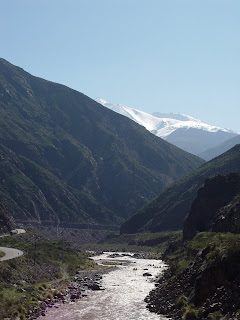
My first reaction was, “Potrerillos?!?!” I haven’t explored many places outside of the city of Mendoza, but Potrerillos is one place I feel like I know very well, having visited three different times to go mountain biking and rafting (The picture at the right is of me, in 2005, in the bustling metropolis of Potrerillos). The town only has a few hundred residents (a guide at Argentina Rafting told me this) and is situated in what they call the “pre-cordillera” which translates to the “pre-mountain range” of the Andes. It is very dry, but the glacier-fed river (pictured below in 2005) that runs alongside the town is spectacular. This pure water provides the brewery with natural, healthy water that is not contaminated by chlorine found in city water supplies.

Jerome is a relatively new brewery, having been started in 1999, and currently employs only four people. The fascinating story of how the brewery came to be is explained by brewer Eduardo Maccari:

"It all started in the eighties, when I met a couple of Czechs that would change the course of my destiny. One winter afternoon, I was told that one of my Czech friends had gone to climb "El Plata", one of the highest peaks in the Andes and he hadn't returned. Fearing that an accident had occurred, I rushed to get help at the Air Force Base. They kindly took me to the site, where we spotted our friend's tent. There he was lying, asleep, frozen. We thought he had died, in fact, he showed no vital signs. We took him to the city of Mendoza, where, after a long time, he miraculously recuperated. In recognition, I was later invited to travel to the Czech Republic, where an old brewer taught me the art of beer making with an old recipe. Now I reproduce that recipe for you. This is how our brewery started. I started making beer as a hobby, in silence. Then I shared it with my friends, and now I'm brewing beer for the rest of Argentina and a few states in the USA, hoping you will enjoy drinking it as much as I do when I make it."
There aren’t many better stories than Eduardo’s. The operation still remains small, with Jerome only making five barrels a day. Those kinds of numbers would make one think that this is a part-time operation in someone’s basement. Not so. The Southern Wine Group, which imports to the United States well-known wineries such as Enrique Foster, snatched up the importing rights and is now distributing Jerome to several states in the U.S.

Currently, Jerome offers four flavors: Rubia, a light ale, Roja, a red ale, Diablo, a strong ale and Negra, a dark ale. You can read their tasting notes in a PDF here. According to this article on a beer website, the famed BBC wine critic Oz Clark came to Mendoza with the idea of tasting many of the fine wines from the region. After trying Jerome at the Hyatt Hotel in Mendoza, Clark raved about the beer and returned to London with his accolades. Weeks afterwards, Jerome had an order request of a 1,000 bottles from the Gaucho Grill, an Argentine-style steakhouse chain in the U.K.

If you are reading from the U.S., you can email Info@SouthernWineGroup.com to find out if Jerome is sold in your area or buy Jerome directly online here. If you are reading in Argentina, you can consult Jerome's list of places it is sold here.

Sources:

Images copied from the Jerome Brewery website and the Southern Wine Group website.

Article: “Cerveza with a sense of place.” By Gary Corbin. Guestontap.com. Accessed on June 26, 2007.

La Cerveza Argentina Es Más Que Quilmes

(The English version of this post can be read here)

Como ustedes ya saben, este es un blog del vino argentino. Sin embargo, esta mañana descubrí una cerveza argentina que está ganando atención en los EE.UU. Primero, quiero clarificar que no considero la Argentina como un país notable para su cerveza. Los supermercados tienen al menos un pasillo para el vino mientras que tenés suerte para encontrar más de cuatro o cinco distintas cervezas. Quilmes, Stella Atrois, Brama, Heineken, y Budweiser dominan el mercado. Y, aunque me encanta el Quilmes por sus calidades de hacerme recordar de buenos momentos en mi vida porteña, soy la primera persona para admitir que la cerveza oficial de la Argentina no es exactamente la mejor cerveza del mundo.

Y parece que Quilmes, al contrario que piensan muchos argentinos, no es la mejor cerveza producida en Argentina (por otra parte, el Buller Brewing Company ubicado en el Microcentro y en la Recoleta en Buenos Aires tiene cervezas muy ricas, aunque son caras si ganas en pesos). Una cerveza domestica que les encantan los críticos es la cerveza artesanal Jerome, fabricada en Potrerillos, Mendoza.

Mi primera reacción fue de mucha sorpresa, “¿¡Potrerillos?!” No he explorado muchos lugares afuera de la ciudad de Mendoza, pero Potrerillos es un lugar que conozco muy bien, después de visitarlo tres veces para hacer mountain bike y rafting. El pueblo solo tiene unos cientos de habitantes (según una guía de Argentina Rafting) y está ubicado en la pre-cordillera de los Andes. El lugar es muy seco (o, al menos en la primavera cuando estaba allí), pero el río que pasa al lado del pueblo es espectacular. Su agua pura, que viene de los glaciares, provee la microcervecería con agua saludable y natural que no es contaminado del exceso de minerales encontrado en el agua en las ciudades.

Jerome es una microcervecería joven, empezado en 1999 y ahora solo tiene cuatro empleados. El cuento del principio de Jerome está explicado por su fundador, Eduardo Maccari:

“Todo comenzó allá por los 80’s, cuando conocí a unos checos que me cambiarían el destino. La historia es así: Una tarde del invierno, me avisaron que uno de ellos, había partido a escalar El Plata, en Vallecitos, y no regresaba. Ante la preocupación de un accidente, me apresuréa pedir ayuda a la Fuerza Aérea Argentina, quienes con sus helicópteros de rescate, gentilmente me trasladaron hasta las laderas del cerro, donde visualizamos la carpa de nuestro amigo. Allí estaba él, dormido, congelado. Pensamos que había muerto, de hecho, no tenía signos vitales. Lo sacamos de la tienda, lo trasladamos a Mendoza, donde después de mucho tiempo, se recuperó. De esta manera, en agradecimiento, fui recompensado con una invitación a Checoslovaquia, donde un viejo cervecero, me enseño el arte de la cerveza con una vieja receta, que ahora reproduzco. Así comenzó esta empresa, primo como un hobbie, en silencio, luego invitando a mis amigos y ahora para todo el País, para que la disfruten al tomarla, así como yo la disfruto al hacerla.”

No hay muchos mejores cuentos que este cuento de Eduardo. La operación sigue muy chica, con una producción de cinco barriles cada día. Estos tipos de números se hacen pensar que esta es una operación en el sótano de alguien. Este no es el caso. El Southern Wine Group, que importa muchas bodegas conocidas como Enrique Foster a los EE.UU., compró los derechos para importar Jerome y ahora se vende en algunos estados y por su sitio del web.

Actualmente, Jerome ofrece cuatro sabores: la Rubia, la Roja, el Diablo, y la Negra. Se puede leer una descripción de cada sabor en la forma PDF acá. Según este articulo de un sitio de web que escribe sobre la cerveza, el crítico famoso de vino de Inglaterra y el BBC, Oz Clark, vino a Mendoza con la intención de catar muchos vinos de la región famosa. Después de probar Jerome en el Hyatt Hotel, Clark alardeó sobre la cerveza y regresó a Inglaterra con sus elogios. Algunas semanas después de su regreso, Jerome recibió un orden por 1,000 botellas del Gaucho Grill, una cadena de parrillas argentinas por Inglaterra.

La lista de los lugares que venden Jerome en la Argentina está acá.

Fuentes

Los imágenes fueron copiados del sitio de web de Jerome Cerveza Artesenal y el Southern Wine Group website.

Articulo: “Cerveza with a sense of place.” Por Gary Corbin. Guestontap.com. Leido en el 27 de junio, 2007.

Friday, June 22, 2007

South America's Rising Star / La Estrella Naciente de Sur América


Here in the North American summer, wine columnists are buzzing about which wines to pair with your barbeque. Well, one of the most widely-read and well-respected weekly wine columns, “Tastings” in the Wall Street Journal by Dorothy Gaiter and John Brecher, (I’ve referred to their column before here) today published “South America’s Rising Star” (subscription required) on Argentina and its signature grape, Malbec.

After giving a summary of Argentina’s import explosion in the U.S. over the past couple of years, the writers conclude, “Having finished the tasting, let's get right to the point: If you don't pick up a Malbec to pair with one of your cookouts soon, you're making a mistake. This is a special grape and this is a good time to be trying it.”

They tested over 60 Malbec wines and concluded that the Felipe Rutini 2004 Malbec was the “Best of Tasting.” The “Best Value” went to the Nieto Senetiner “Reserva” 2004.

The writers’ decision to publish an entire article on Malbec and with such glowing remarks surely fortifies the Argentina/Malbec’s success in the U.S. As they write, “When we first wrote about Malbec in 1999, we had trouble getting enough for a blind tasting. How things have changed. Argentina in general, and Malbec specifically, are getting a tremendous amount of attention from the wine world these days.”

Argentine winemakers, once mired in a industry-wide crisis in the 1980s, should be proud to have carved their niche in the global wine industry.

Article: “South America’s Rising Star” by Dorothy Gaiter and John Brecher. Wall Street Journal. June 22, 2007.
Image: Rutini Malbec 2003. Found at the Bodega La Rural website: http://www.larural.com/fch_fr_rmalbec.htm.

Acá en el verano norteamericano los columnistas de vino están escribiendo mucho sobre los vinos que se pueden tomar cuando tenés un asado. Bueno, unos de las columnas más leídas y respetadas de los EE.UU. se llama “Tastings” en el Wall Street Journal y es escrito por Dorothy Gaiter y John Brecher (he referido a su columna antes) y hoy publicaron un articulo titulado “La estrella naciente de Sur América” (tiene que tener una subscripción al periódico) sobre la Argentina y su uva famosa, el Malbec.

Después de sumir la explosión de la importación de los vinos argentinos en los EE.UU. durante los tres años pasados (y ellos no pudieron resistir la comparación a Chile), los escritores concluyeron, “Después de terminar la cata de vinos, tenemos que ser sinceros: Si no compras un Malbec para unos de sus asados, estás cometiendo un error. Esta es una uva especial y ahora es la hora buena para probarla.”

Ellos probaron más de 60 vinos de Malbec y concluyeron que el Felipe Rutina 2004 Malbec fue el “Mejor de la Cata de Vinos.” El vino del “Mejor Valor” fue el Nieto Senetiner “Reserva” 2004.

La decisión de los escritores para publicar un artículo entero sobre el Malbec con tantos elogios señala la fortalecimiento del Malbec en el mercado norteamericano. Como ellos escribieron, “Cuando escribimos sobre el Malbec en 1999 por la primera vez, teníamos problemas de encontrar bastante vinos para una cata de vino. Es impresionante como los tiempos han cambiando. Estos días, la Argentina, y más específicamente el Malbec, están recibiendo una tremenda cantidad de atención del mundo de vino.”

Los winemakers argentinos, hace veinte años atrapados en una crisis de consumo, deberían estar orgullosos para haber llegado a este nivel de respeto del mundo de vino.

Articulo: “La estrella naciente de Sur America” por Dorothy Gaiter and John Brecher. Wall Street Journal. 22 de junio, 2007.
Imagen: Rutini Malbec 2003. Encontrado en el sitio de la Bodega La Rural: http://www.larural.com/fch_fr_rmalbec.htm.

Thursday, June 21, 2007

Not Just Malbec / No Sólo Malbec


For the English-speaking audience, Wineloverspage.com right now is featuring a very informative discussion of Argentine wine with Alejandro Audisio.

Para los lectores que entienden inglés, hay una entrevista muy informativa sobre el vino argentino en el sitio Wineloverspage.com con Alejandro Audisio.

Wine Lovers Page. “Not Just Malbec.” With Alejandro Audisio.

Monday, June 18, 2007

Can Torrontés Catch On? / ¿El Torrontés = El Próximo Malbec?


An article in Wine and Spirits Magazine caught my eye as it featured the “Top 4 Argentine Value Brands.” Two out of the four wineries had their torrontés grape featured as their best value. This struck me because Argentina, as I’ve said before, is almost synonymous with Malbec here. If Argentina can market torrontés as another Argentine alternative, their tremendous growth in the U.S. market will certainly continue.

On a completely unrelated wine note, congratulations to Ángel Cabrera who beat out Tiger Woods in the US Open in golf this past weekend. After a week in which Argentines Manu Ginobili and Fabricio Oberto took home the NBA title for San Antonio, I’d say that Argentina had a pretty good week in the U.S. sports world.

Picture: Domingo del Plata Winery. Cafayate, Argentina. Found at: http://www.dominiodelplata.com.ar/vinos_crios.php

Un articulo en la revista Wine and Spirits Magazine me llamó la atención cuando publicó una nota titulado “Top 4 Argentine Value Brands” (El top 4 marcas mas valoradas argentinas). Dos de sus mejores marcas fueron destacados por su torrontés excelente. Me sorprendió porque la Argentina, como he dicho antes, es casi un sinónimo con el Malbec en los EE.UU. Si la Argentina puede hacer muy bien marketing con el torrontés como otro alternativo argentino, sin duda su crecimiento tremendo en los EE.UU. seguirá creciendo.

Para hablar sobre un tema completamente no relacionado al vino, quiero felicitar a Ángel Cabrera quien ganó el Abierto Estadounidense de Golf este fin de semana pasada. Después de una semana cuando los argentinos Manu Ginobili y Fabricio Oberto ganaron el titulo de basket con el San Antonio Spurs, diría que la Argentina tenía una gran semana en el mundo deportivo acá en Norteamérica.

Imagen: Dominio del Plata Winery. Cafayate, Argentina. Dirección: http://www.dominiodelplata.com.ar/vinos_crios.php