Showing posts with label mendoza. Show all posts

Friday, August 31, 2007

Fotos lindas de Mendoza


Mientras que el verano termina en el hemisferio norte, los argentinos están esperando la llegada de la primavera. Ayer, Michael de Vines of Mendoza publicó algunas fotos muy lindas de su nueva bodega en Valle de Uco. Se puede verlos acá: Fotos de la Valle de Uco.

Wednesday, July 25, 2007

An Interview with Federico Kunz, Director of Wine of Mendoza

(Para leer esta nota en castellano, haga clic aquí)

The other day I had the great joy of interviewing one of the many young entrepreneurs in the Argentine wine industry. His name is Federico Kunz and he is the founder and current director of Wine of Mendoza, a company that offers a variety of services to the wine sector.


Please describe to the readers a little bit about yourself. What region in Argentina are you from? How many years have you spent in the wine industry? Do you come from a background in which wine played an important role?
My name is Federico Kunz and I was born in Buenos Aires on November 26, 1976. That makes me 30 years old. Three years ago I moved to Mendoza when I married my wife, Eugenia, who was born in Mendoza. Currently, we both are linked to the wine industry in distinct ways. She focuses on the wine tourism aspect while I work on the commercial end of the industry. Before working in the wine industry, I occupied a position in the banking sector as an internal auditor. And yes, wine was always an important part of my family, but the passion for this beverage began with my arrival to Mendoza.

What did you study? What was your major?
I received a degree in Tourism after which I began to study Business Adminsitration at the University of Buenos Aires, which I didn’t end up finishing. As far as wine, I really learned a lot by visiting wineries and asking everything I could think of, and of course trying a lot of different wines.

How did your passion for wine really begin?
When I arrived in Mendoza I had the opportunity to visit a lot of wineries, from the smallest which we call “boutiques” to the most industrial, and even to the most traditional. Each winery makes wine in a distinct way with its own methods and patterns. At the beginning, that’s what really grabbed my attention. After having the chance to try and taste distinct varietals combined with the discovery of the different methods of making the wine, I really became passionate about this new world that had been opened up to me.

When did you start Wine of Mendoza and with what objectives?
Wine of Mendoza was born two years ago with the objective of being a specialized business in the Mendoza wine region as well as in all of Argentina. We wanted to be well-known, valued, and chosen by the domestic and international markets as a trustworthy, competitive, and innovative provider of wines. In short, we wanted to provide service that was founded on a quality product and high standards. Finally, our main goal is to sustain our clear and consist philosophy: shorten the distance between the producer of wine and its consumer.

A large part of the expansion of the wine industry has come in the export market. Are you hoping to develop the international part of your business or focus on the domestic market?
The external market is something that we are currently trying to better develop. Since the beginning of this year we have been allotting resources so as to focus more on the export sector and to be able to reach the rest of the world. We are currently working with FedEx, DHL, and TNT in order to send bottles to other parts of the world. In addition, we are making a lot of connections through the international tourists that visit Mendoza and other regions of Argentina such as Patagonia.

You are part of the new generation of entrepreneurs in the Argentine wine industry. What differences are there between the older generations and your generation?
I believe the fundamental difference is service. People are talking more about the service that comes with a product. Our company not only provides products but we also offer services: we prepare, we recommend, and we adjust wine lists for restaurants, and we even create wine tastings according to the tastes of each client. We are constantly providing service to our clients. We are always seeking to provide more value to what we currently do. Although the consumption per person in Argentina has gone down, the quality of the wine that is consumed has gone up, and thus we have to pay attention to this trend and add value and service to these products.

Are you guys, and when I say “guys” I’m referring to this new generation, more optimistic due to the growth of the wine industry during the past 10 years than the older generations that have experienced several crises?
During the last 10 years Argentina has grown in the wine sector, which is mainly due to the monetary policy that we had until 2001 that helped the wine industry expand to other markets and make important technological advances. I believe that today the industry continues to grow thanks to favorable circumstances in the current economy, in particular the exchange rate, but also the quality that Argentina has achieved in its products and the place that it has earned in the external market.

How does the unstable macroeconomic history of Argentina affect your outlook towards the future?
I’m not afraid of falling into another financial crisis similar to what has happened in the past. I know that it is especially prudent to plan sometimes and one form to protect against another crisis, as I mentioned earlier, is to set aside as many resources to the international market as the domestic market.

Picture: Federico with his wife Marie Eugenia Rodriguez who co-owns the tourist agency Aventura Wine in Mendoza.

More information on Wine of Mendoza can be found on their website at: http://www.wineofmendoza.com/.

Sunday, July 08, 2007

Turismo de aventura en Mendoza

(To read this post in English, click here)

Mis entradas recientes sobre la Microcervecería Jerome en Potrerillos, Mendoza y la entrada sobre el turismo lujoso de vino me hicieron pensar sobre mis experiencias de turismo de aventura en Mendoza. Aunque supongo que el enófilo promedio no busca la aventura extrema, hay algo para todos.

Si tenés cuatro días en Mendoza, tal vez te gustarías descansar de las visitas a las bodegas por un día con un día de diversión en los Andes. Las montanas son espectaculares en Mendoza y el viaje tendrá muchas vistas divinas. He tenido la oportunidad de ir a Potrerillos en tres distintas ocasiones: dos veces para hacer mountain bike y una vez para hacer rafting.

En octubre de 2005 fui a Argentina Rafting en un colectivo que salió del terminal de ómnibus que es un camino un poco largo del centro de Mendoza. El colectivo fue muy barato (¿diez pesos?) y nos llevó a Potrerillos a la entrada de Argentina Rafting. En diciembre de 2006 fui con mi hermano que pagó por el viaje así que fuimos en el bus que proviene Argentina Rafting. El viaje cuesta $27 pesos pero vale la pena si no querés ir en colectivo común. También es una experiencia mas autentica para ir en el colectivo con otros argentinos en comparación con el bus de la empresa donde hay muchos extranjeros.

Después de un viaje de una hora y media, podés inscribirte en varias actividades. La mayoría de las actividades ocurren dos veces cada día dependiendo en la demanda. Si queres ir durante la mañana deberías llegar antes de las 9. También podés hacer excursiones que duran varios días y ofrecen varias actividades. Podés escoger entre rafting, kayak (aunque necesitas hacer un curso si no tenés experiencia), trekking, mountain bike, cabalgatas, canopy, y hidrospeed. Cada aventura cuesta cerca de sesenta pesos por la mañana.

El viaje de rafting fue unos de las cosas mas divertidas que he hecho. Nunca había hecho el rafting y he estado intentado hacerlo nuevamente desde el momento que salí la balsa. El río no es peligroso (ellos te dan un casco y un chaleco salvavidas) pero fue bastante rápido para ser divertido. Solo caímos una vez pero pudimos subir la balsa sin problema. Hay un fotógrafo para sacar fotos por todo el viaje y podés comprar un disco compacto con todas las fotos después de la excursión. Las guías conocen muy bien el río y aseguran que te diviertes. Hay bastante tiempo para charlar durante el viaje y hice amigos con dos médicos de la provincia de Buenos Aires.

Las dos otras excursiones que hice consistió de mucho ejercicio en la excusión de mountain bike. La primera vez fui solo en un sábado. Estaba en un grupo de diez personas. Me divertí mucho y me ejercí bastante – estaba buscando un poco de entrenamiento. Diría que deberías estar en bastante buena forma para hacer mountain bike, aunque el curso no es muy difícil para un novato. La segunda vez que fui, yo estaba con mi hermano y fuimos solos con la guía. El guía cambió el curso un poco para retarnos un poco. Pudimos descansar cuando queríamos. Sugiero que vayas en un día de la semana para tener una experiencia personal.

Para concluir, tenia tres viajes fantásticos a Potrerillos. Un día de aventura en los Andes es una manera de ver las montanas especulares y perder un poco del peso que ganas después de comer tanta comida rica en la ciudad de Mendoza.

Wednesday, July 04, 2007

Adventures Abound in Mendoza

(Para leer esta nota en castellano, haga clic aquí)

My recent posts on the Jerome Microbrewery in Potrerillos, Mendoza and the post on luxury wine tourism made me start to think that I should write on my experience in “adventure tourism” in Mendoza. Although I’m guessing your average oenophile isn’t an adventure seeker, there’s something out there for everyone.

If you have four days in Mendoza, you may want to break up your winery visits with a day of fun in the Andes. The mountains are spectacular in Mendoza and just driving through them is fun. I’ve had the chance to go to Potrerillos on three different occasions to twice mountain bike and to go rafting once.

In October, 2005 I headed up to Argentina Rafting on a bus that left the central terminal in Mendoza, which is a bit of a walk outside downtown Mendoza. The bus was extremely cheap (a couple dollars) and it left me off in Potrerillos right in front of Argentina Rafting. In December of 2006 I was with my brother who was paying, so I took the Argentina Rafting bus that picks you up at your hotel. The bus costs an extra US$9 but its definitely worth it if you aren’t very adventurous, don’t want the hassle of getting to the bus station and waiting for the bus, or don’t speak Spanish. If you’re on a tight budget, definitely take the bus from the terminal. It’s also a much more authentic experience (i.e. you won’t be sitting next to other Americans and Brits).

Once you’re at Argentina Rafting you can sign up for a number of different activities. Most activities are done twice a day depending on the demand. If you want to do the morning excursion you should get there before 9. You can also do excursions that last several days and offer a lot of different activities. So you can choose between doing rafting, kayaking (although you will need to do a course there if you aren’t experienced), hiking (known as trekking in Argentina), mountain biking, horseback riding, zip-lining (known as “canopy”) or hidrospeed (you go down the river on some sort of disc). Every activity is really cheap at around US$20 for a half of a day.

The rafting trip was one of the most fun things I’ve ever done. I had never gone rafting and have been trying to go again ever since. The river is not dangerous at all (they provide helmets and life vests) but it is fast enough to be enjoyable. I only fell out once but it was no big deal – I just got back in. They employ a photographer to take pictures all the way down the river which you can buy on a CD at the end for a very low price. The guides are extremely knowledgeable and make sure you have a great time. There’s enough time for some chatter on the boat, and I made friends with two doctors from the province of Buenos Aires. I’m quite sure all of the guides speak good enough English to tell you whatever you need to know.

The other two times I went I decided I wanted a workout and went mountain biking. The first time was on a Saturday and was alone, which was fine. I was in a relatively large group of ten. I had a great time and got a good workout. I would say that you should be in decent shape to do the mountain biking, although the course isn’t very challenging at all for a novice. The second time I went I was with my brother and we were alone with the guide. He was great in tailoring the course to challenge us a little bit. We were also able to rest when we wanted to. I would suggest going on a week day to have this kind of an experience.

All in all, I had three great trips up to Potrerillos. A day of “adventure” up in the Andes would be a great way to work off the calories from those gourmet meals you’re having back in Mendoza City.

Thursday, June 28, 2007

El Turismo de Vino en Mendoza

(To read this post in English, click here)

La revista norteamericana Forbes escribe que la elite estadounidense ya no busca lugares tradicionales para las vacaciones como Londres, Paris, Roma, y Hawaii. ¿Dónde van los ricos ahora? ¡Argentina!

“En Argentina, la gente sabia satisface s
us deseos enófilos en Mendoza, una región fértil con bodegas que queda dos horas en avión de Buenos Aires. Con la atención internacional que recibe la Argentina sobre su vino y los hoteles lujosas como el Cavas Wine Lodge, que abrió en 2005, que ofrece alojamientos exclusivos, los viajadores concluyen que esta región vale la pena para visitar.”

Los que marcaron las tendencias de visitar la Argentina fueron los enófilos y los “sofistonautas” que ya conocía Napa, California y ya habían visitado a Francia y Italia. La combinación de la devaluación del peso en 2002 y la continuidad de la debilidad del dólar en comparación al euro creó la oportunidad de conocer una parte del mundo desconocido y una región vitivinícola nueva. Los empresarios en Mendoza respondieron a la demanda con alojamientos lujosos hechos para estos sofistonautas.

Muchas turistas de vino que viajan a Mendoza quieren pasar al menos una noche y un día en Buenos Aires. Recomiendo 1555 Malabia House, ubicado en el barrio Palermo Soho, que es muy fashion ahora. Mi hermano quedó allí el diciembre pasado y le encantó. El staff es muy amable, el chef hace lo que quiere para el desayuno cada mañana, se puede caminar a muchos restaurantes muy buenos, y las habitaciones son muy lindas. También, no es muy caro para lo que es – US$140 por una noche.

Si sos un enófilo, tal vez deberías alojarse en la Mansión Vitraux Hotel Boutique y Wine Lounge en el barrio San Telmo. No tengo expe
riencia personal allí, pero es relativamente nuevo y está en un barrio que está muy cerca de la Plaza de Mayo (Casa Rosada, Banco Central, Catedral, Ministerio de Economía, etc.) y Puerto Madero. También hay algunos restaurantes buenos en San Telmo y el mejor shopping de antigüedades en Buenos Aires.

También, he leído buenas criticas del Bobo (a la derecha), que está en Palermo como 1555 Malabia House.

Para las criticas de restaurantes de Buenos Aires, lea Guía Óleo y si lee ingles, hay un enorme lista de criticas en el blog de Dan Perlman, un dueño norteamericano de un restaurante en Buenos Aires.

Cuando llega a Mendoza después de un vuelo de dos horas desde Buenos Aires, tiene muchas opciones para el alojamiento lujoso. Probablemente el más lujosa afuera de la ciudad de Mendoza es el Cavas Wine Lodge. Pero si no quiere gastar US$300 por cada noche, no vayas a su sitio del web porque la tentación de hacer una reservación será muy fuerte. Hay una bodega en el lodge y las habitaciones tienen una vista hermosa de los Andes. Parece espectacular.

Un sitio bueno para buscar lugares para alojarse es BestOfMendoza.com. Este sitio es una colección de hoteles, bodegas, y restaurantes de primera categoría. No va a equivocarse con lugares que están en su sitio.

Para concluir, aquí es un resumen de algunos de los lugares de “Best of Mendoza.”

Hotel Piscis Las Leñas
Si te gusta esquiar y vivís en el hemisferio norte, ven en el Julio para disfrutarse en los Andes.

Estancia Rancho’e Cuero
Si querés ser un gaucho durante el día pero vivir en la modernidad, este estancia es para vos.

Bodega Salentein
Para los que quieren dormir al lado de la vid.

Park Hyatt Mendoza

Ubicado en la ciudad de Mendoza, no podés equivocarte en este hotel glamoroso (foto abajo).

Articulo: "Status-Symbol Trips." Por Shivani Vora. Forbes.com. 23 de mayo, 2007.

Wine Tourism in Mendoza

(Para leer esta nota en castellano, haga clic aquí)

Forbes Magazine claims that the “American elite” no longer are seeking to go to the traditional vacation spots (London, Paris, Rome, Hawaii). So where are they going now? Argentina!

“In Argentina, the cognoscenti indulge their oenophile instincts in Mendoza, a vineyard-rich region about two hours by plane from Buenos Aires. With Argentina's wine receiving international attention and luxury hotels like Cavas Wine Lodge, which opened in late 2005, offering upscale accommodations, travelers are finding this a worthwhile region to visit.”


The trend-setters were of course the oenophiles and “sophistonauts” who already knew Napa like the back of their hand and had been to France and Italy. The combination of the peso’s devaluation in 2002 and the dollar’s continued weakness in comparison to the euro has created the opportunity to get to know a new part of the world and a new wine region. Entrepreneurs in Mendoza have responded with more upscale accommodations tailored to the sophistonauts. The Forbes article mentions Cavas Wine Lodge, but I thought I’d mention a few others that offer a luxury experience.

Most wine tourists who travel to Mendoza want to spend a couple days in Buenos Aires. I can highly recommend 1555 Malabia House (pictured at the left), located in the trendy Palermo SoHo neighborhood. My brother stayed there last December and absolutely loved it. The staff is extremely friendly, breakfast is made to order every morning, it is within walking distance of a lot of great restaurants, and the rooms are very nice. It is also an excellent deal, with their smallest rooms going for US$140 a night.

If you’re an oenophile, you might want to try the Mansión Vitraux boutique hotel and wine lounge in San Telmo. I don’t have any personal experience with it, but its relatively new and is in a neighborhood that is within walking distance to the Plaza de Mayo (home to the Casa Rosada, the Central Bank, the Economic Ministry, the original town hall, etc). There are also some good restaurants in San Telmo and the best antique shopping in Buenos Aires.

One other boutique hotel I’ve heard good things about is Bobo, which, like 1555 Malabia House, is in Palermo.

For the most comprehensive English-language restaurant reviews in Buenos Aires, check out Dan Perlman’s Saltshaker blog. In addition to running one of the new family-style, closed-door restaurants, he is also a sommelier, which is evident in his reviews.

Once you get to Mendoza after the two hour flight, you have a number of options. The most luxurious is the aforementioned Cavas Wine Lodge (pictured at the right). If you aren’t willing to spend 300 dollars a night for a double, don’t go to their website because you will be tempted to make a reservation. There is a vineyard on site and rooms overlook the Andes. It looks spectacular.

A good website to check out is BestOfMendoza.com. This is a collection of high-end hotels, wineries, and restaurants that have formed a loose alliance. You can’t go wrong with any of the places that are listed there.

To conclude, here's a quick rundown of some of the "Best Of Mendoza":

Hotel Piscis Las Lenas
If you are a ski bum, come here in July to carve the southern hemisphere snow.

Estancia Rancho’e Cuero
If you want to feel like a gaucho during the day and be pampered at night, this ranch is for you.

Bodega Salentein
For those who want to sleep with the vines (pictured at the right).

Park Hyatt Mendoza

Located in the city of Mendoza, you can’t go wrong with this beautiful hotel.


Article: "Status-Symbol Trips." By Shivani Vora. Forbes.com. May 23, 2007.
Image 1: 1555 Malabia House.
Image 2: Cavas Wine Lodge.
Image 3: Bodega Salentein.

Wednesday, June 27, 2007

Growing Wine Industry Threatens Native Argentines

(Para leer este articulo en castellano, haga clic aquí)

The growth of the Argentine wine industry has been thoroughly covered on Argenvino. However, the consequences of such growth have not been detailed as rigorously. A recent National Geographic article describes the plight of the Huarpe people living in the Monte Desert. Due to the increased use of upstream water supply by grape growers, researchers have concluded that the Huarpe may begin to receive less and less water in their already dry location.

At the turn of the twentieth century the massive Italian and Spanish migration forced the Huarpe – which are also know as Lavallinos – to find land elsewhere. Instead of going to cities, they went to the Monte Desert, a place nobody was willing to go to. They now rely on the Mendoza River, which is fed by melting snow from the Andes. However, as the wine industry continues to grow, more grape growers are using the water.

The research that has concluded that the water tables are diminishing has been completed by agronomist Esteban Jobbagy of the National University of San Luis and colleagues at Duke’s Nicholas School of the Environment and Earth Sciences.

For Jobbagy, the solution lies in how vineyards irrigate. Most vineyards still use the mantle irrigation system, which includes flooding the vines every month or so. He claims that using the more advanced (and expensive) drip irrigation technique, which uses small pipes to feed the vines slowly, would help solve the problem.

Unfortunately, this is an issue that may fall on deaf ears. The wine business is a multi-billion dollar industry, while the Huarpe Indians only number in the few hundreds and have virtually no financial resources.

Source: “Wine Boom Threatens Native Argentine Water Source.” By Lorne Matalon. National Geographic News. June 20, 2007.

Image Location: National Geographic News Photo Gallery. Picture is of agronomist Esteban Jobbagy (National University of San Luis).

La industria de vino amenaza la fuente de agua para los indios

(To read this article in English, click here)

El crecimiento de la industria vitivinícola en la Argentina ha sido discutido mucho en Argenvino. Sin embargo, las consecuencias de este crecimiento no ha sido detallado tan rigurosamente. Un artículo reciente en la revista norteamericana, National Geographic describe la situación apremiante de los indios Huarpe que vive en el Desierto Monte. Debido al uso, describe la situación incrementado del agua del Río Mendoza de las bodegas, el Huarpe recibe menos agua en su lugar que ya sufre en un lugar seca.

A los principios del siglo veinte las olas de inmigrantes italianos y españoles causaron el Huarpe para mudarse de la Pampa al desierto. Ahora ellos dependieron en el Río Mendoza, que lleva agua desde los Andes. Sin embargo, mientras que la industria vitivinícola continúa crecer, más campesinos de uvas usan el agua y hay menos agua para el Huarpe que queda más de 100 kilómetros afuera de la zona vitivinícola.

La investigación que concluyó que el nivel del agua freática está disminuyendo fue hecho por el ingeniero agrónomo Esteban Jobbagy de la Universidad Nacional de San Luis y sus colegas en Duke University (EE.UU.).

Jobbagy cree que la respuesta al problema es un cambio del tipo de sistemas de irrigación. Muchas bodegas irrigan las viñas con una masiva concentración de agua una vez cada mes. Jobbagy sostiene que el uso del sistema más avanzado (y caro) – la irrigación que usa gotas de agua que va a cada planta – podría resolver el problema.

Desgraciadamente, este es un tema que puede caer en saco roto. El negocio de vino es una industria multi-mil millonaria mientras que los indios Huarpe solo consisten de cientos de habitantes y no tienen recursos financiarías.

Fuente: “Wine Boom Threatens Native Argentine Water Source.” Por Lorne Matalon. National Geographic News. 20 de junio, 2007.

Lugar de las imágenes: National Geographic News Photo Gallery.

Tuesday, June 26, 2007

Argentine Beer Is More Than Just Quilmes

(La versión en castellano puede estar leída acá)

As you probably already know, this is a blog about Argentine wine. However, this morning I stumbled upon an Argentine beer gaining some attention here in the U.S. First of all, Argentina would never be mistaken for Germany or Belgium for its beer quality and variety. While supermarkets dedicate entire aisles to wine, you would be lucky to find more than four or five kinds of beer. Quilmes, Stella Artois, Brahma, Heineken, and Budweiser dominate the market. And, although I truly do love Quilmes for its memory-inducing qualities of life in Buenos Aires, I am the first to admit that it’s not exactly the best beer in the world.

It seems that Quilmes, contrary to what many Argentines think, isn’t even the best domestic beer in Argentina (side note: the Buller Brewing Company in Buenos Aires has some very tasty beers, albeit pricey if you make money in pesos). One domestic beer critics are raving about is the Jerome Handcrafted Beer from Potrerillos, Mendoza.

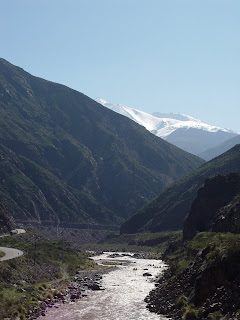
My first reaction was, “Potrerillos?!?!” I haven’t explored many places outside of the city of Mendoza, but Potrerillos is one place I feel like I know very well, having visited three different times to go mountain biking and rafting (The picture at the right is of me, in 2005, in the bustling metropolis of Potrerillos). The town only has a few hundred residents (a guide at Argentina Rafting told me this) and is situated in what they call the “pre-cordillera” which translates to the “pre-mountain range” of the Andes. It is very dry, but the glacier-fed river (pictured below in 2005) that runs alongside the town is spectacular. This pure water provides the brewery with natural, healthy water that is not contaminated by chlorine found in city water supplies.

Jerome is a relatively new brewery, having been started in 1999, and currently employs only four people. The fascinating story of how the brewery came to be is explained by brewer Eduardo Maccari:

"It all started in the eighties, when I met a couple of Czechs that would change the course of my destiny. One winter afternoon, I was told that one of my Czech friends had gone to climb "El Plata", one of the highest peaks in the Andes and he hadn't returned. Fearing that an accident had occurred, I rushed to get help at the Air Force Base. They kindly took me to the site, where we spotted our friend's tent. There he was lying, asleep, frozen. We thought he had died, in fact, he showed no vital signs. We took him to the city of Mendoza, where, after a long time, he miraculously recuperated. In recognition, I was later invited to travel to the Czech Republic, where an old brewer taught me the art of beer making with an old recipe. Now I reproduce that recipe for you. This is how our brewery started. I started making beer as a hobby, in silence. Then I shared it with my friends, and now I'm brewing beer for the rest of Argentina and a few states in the USA, hoping you will enjoy drinking it as much as I do when I make it."
There aren’t many better stories than Eduardo’s. The operation still remains small, with Jerome only making five barrels a day. Those kinds of numbers would make one think that this is a part-time operation in someone’s basement. Not so. The Southern Wine Group, which imports to the United States well-known wineries such as Enrique Foster, snatched up the importing rights and is now distributing Jerome to several states in the U.S.

Currently, Jerome offers four flavors: Rubia, a light ale, Roja, a red ale, Diablo, a strong ale and Negra, a dark ale. You can read their tasting notes in a PDF here. According to this article on a beer website, the famed BBC wine critic Oz Clark came to Mendoza with the idea of tasting many of the fine wines from the region. After trying Jerome at the Hyatt Hotel in Mendoza, Clark raved about the beer and returned to London with his accolades. Weeks afterwards, Jerome had an order request of a 1,000 bottles from the Gaucho Grill, an Argentine-style steakhouse chain in the U.K.

If you are reading from the U.S., you can email Info@SouthernWineGroup.com to find out if Jerome is sold in your area or buy Jerome directly online here. If you are reading in Argentina, you can consult Jerome's list of places it is sold here.

Sources:

Images copied from the Jerome Brewery website and the Southern Wine Group website.

Article: “Cerveza with a sense of place.” By Gary Corbin. Guestontap.com. Accessed on June 26, 2007.

Saturday, May 12, 2007

Malbec in Sports Illustrated? / ¿El Malbec en Sports Illustrated?

I was shocked to see that Sports Illustrated resident online NFL guru “Dr. Z” was giving out great advice on Argentine Malbec the other day. In his weekly “Mailbag” column, a reader asked, “Can you recommend an Argentine Malbec, and…a South African red?” Apparently Dr. Z in addition to being an NFL insider, is quite the wine enthusiast. What did he recommend for the reader? “For Malbecs, and I refer to my notes from a Wine Media Guild dinner of a year ago, try the Valentin Bianchi Elsa ($9) and the High Altitude ($10) for terrific bargain wines. Another fine value is a very clean, silky Pascual Toso 2004 Mendoza Reserve ($18), and for a big, thick muscular one ... just right for my ex-wife's pot roast ... try the Bodega Noemia Patagonia J. Alberto, 2002 ($37.50).”

That’s quite a lengthy, detailed answer on wine for a column on SI.com! Also, I was pumped to see his recommendation of Pascual Toso, one of my favorite wineries due to winemaker Enrique Toso’s kindness in letting me interview him while doing research in Mendoza. My hat goes off to Dr. Z!

"NFL Mailbag." By Dr. Z. Found at: http://sportsillustrated.cnn.com/2007/writers/dr_z/05/11/mailbag/.

Me impresionó que Sports Illustrated (el mejor revista semenal de deportes en los EEUU) en su edicion de la web mencionó el Malbec. Su columnista “Dr. Z” que es su gurú del NFL (la liga profesional de futbol americano) contestó a una pregunta de un lector en su columna semenal “Mailbag.” El lector preguntó, “Usted puede recomendar un Malbec Argentino y tinto de Sur Africa?” Aparentemente Dr. Z es un grande entusiasta de vino. Él contestó, “Para los Malbec, refiero a mis apuntes de una cena del Wine Media Guild que ocurrió hace algunos años, probá el Valentin Bianchi Elsa (US$ 9) y el High Altitude (US $10) por vinos terrificos y barratos. Otra ganga es un vino limpio y sedoso – Pascual Toso 2004 Malbec Reserve (US $18), y para un grande, musculoso vino…perfecto para el carne para asar de mi ex esposa…probá el Bodega Noemia Patagonia J. Alberto, 2002 (US $37.50).”

¡Es una respuesta bastante detallada sobre el vino en un sitio de deportes como SI.com! También, me gustó mucho su recomendación del vino de Pascual Toso. Pascual Toso es unos de mis bodegas favoritas a causa de la amabilidad de vinicultor Enrique Toso cuando reuní con él durante mis investigaciones en Mendoza.

"NFL Mailbag." Por Dr. Z. Se puede encontrar a: http://sportsillustrated.cnn.com/2007/writers/dr_z/05/11/mailbag/.

Tuesday, March 13, 2007

I'm Alive / Estoy vivo

First off, sorry for the long delay. Midterms and lacrosse season don’t exactly equate to a lot of time to write a blog. So while I’ve been gone Mendoza has been busy with Vendimia and the wine bloggers have been talking about other things, like Michel Rolland telling everyone that Argentine wine was superior than Chilean wine (it was also covered by my fellow bloggers here and here). The only thing I have to say is that Rolland has an interest in Argentine wine in his Clos de los Siete vineyard. Below are some interesting news stories about Argentine wine that I didn’t have time to post. Oh, and who could forget to link to the Vendimia beauty queen from the city of Mendoza (who cares if she didn’t win the overall prize for the province?).

Primero, pido muchas disculpas por la demora de los posts. Los exámenes parciales y la temporada de lacrosse no me dejaron mucho tiempo para escribir. Mientras que estaba ausento la industria vitivinícola en la Argentina estuvo muy ocupado con Vendimia y otros temas como el comentario de Michel Rolland sobre la superioridad del vino argentina en contraste al vino chileno (los blogs escribieron sobre la situación acá y acá). La única cosa que voy a decir sobre su comentario es que Rolland tiene un interés en el éxito del vino argentino porque tiene una bodega, Clos de los Siete en Mendoza. Abajo hay algunos artículos publicados en la prensa internacional sobre el vino argentino. Y quien puede olvidar de la reina de belleza de la ciudad de Mendoza (¿Quién le importa que no ganó el Reina Nacional de la Vendimia?).

Links to stories:
"Argentine domestic consumption increased, barely."
By Vinos de Argentina.

Vendimia Vendimia Vendimia!
Vines of Mendoza Coverage.
"Argentina boasts a plethora of grapes." By Laurie Daniel. March 7, 2007. The Tribune (San Luis Obispo, CA).

Saturday, February 24, 2007

An Argentine “Y” Store? / ¿Un negocios "Y" de vino argentino?

This week’s Wall Street Journal “Tastings” column (need subscription), written by Dorothy Gaiter and John Brecher, is about a new trend in the U.S. wine retailer business. The trend is towards smaller, customer-friendly wine establishments that they call “Y Stores”, as they consciously target generation Y (defined as anyone born between 1978 and 1998). This was particularly interesting to me, as not only am I a member of generation Y, but my generation is increasingly interested in wine and will be the generation to push the U.S. past France in 2010 for the honor as the top wine consumer nation in the world (although, admittedly, the U.S. has a long way to go to get into the top 50 for per capita consumption).

La columna de vino semenal en el Wall Street Journal, escrito por Dorothy Gaiter y John Brecher, se trata de un nuevo ritmo de la venta de vino en los EE.UU. El ritmo consiste de negocios de vino que son más chicos y más amables para el consumidor. Los periodistas los nombran “negocios Y” porque su blanco es la generación Y (se define por una persona que nació dentro de 1978 y 1998). Este hecho me interesa porque soy un miembro de la generación Y y mi generación es más interesado en el vino cada día y será la generación que adelanta a los EE.UU. a la posición numero 1 en el mundo para el top consumidor de vino (aunque tenemos mucho trabajo para hacer para llegar al top 50 en términos de consumo per capita).

The article discusses how Y stores try to appeal to the customer by arranging the store in a consumer-friendly layout. For example, the authors profile Bottlerocket Wine & Spirits in Manhattan which organizes its wine by country (from “Argentina to the U.S.”) and then by theme, such as “seafood”, or “third date.” These stores generally carry a smaller selection of wine than the big chain stores and the authors admit that they still like the huge warehouse wine retailers that have an extraordinary selection.

El articulo habla de la manera en lo que los negocios "Y" intenta atraer al cliente por ordenar el negocio que es fácil para navegar. Por ejemplo, los autores escriben sobre Bottleneck Wine & Spirits en Manhattan que organiza su vino por país (“desde la Argentina hasta los EE.UU") y luego por el uso del vino, como “mariscos”, o “tercer cita”. Generalmente estos negocios llevan una selección más chica que los negocios cadenas.

The most Argentina-pertinent part of the story was Y stores’ focus on a theme. For example, Y store Tinto Fino in Manhattan features 115 Spanish labels and as the authors point out, “consumers can go deeper into certain regions than ever before because these stores tend to find unusual stuff from small producers.” I wonder if the guys from Vines of Mendoza have ever thought about such a venture in the US.

El aspecto que es pertinente a la Argentina es el parte que se trata de un negocio que sólo tiene vinos españoles. Tinto Fino en Manhattan lleva 115 bodegas españolas y como los autores apuntan, “los consumidores pueden explorar más de estas regiones que antes porque estos negocios encuentran vinos de los productores chicos.” Estoy pensando si los hombres de Vines of Mendoza ya habían pensado de la idea para los EE.UU con vinos argentinos.

A couple more tidbits: this is one crazy contraption; many stores offer notes on each wine when you scan the bar code into computers located around the store; tastings with real wine glasses (not plastic cups); and some stores are even offer “wine boot camp” for those who really want to know about wine. And last but not least: "Almost one-in-four men try to impress friends or dates by pretending to be wine buffs, reveals a new survey. However, most risk being exposed as buffoons according to the poll, which found knowledge of the drink is low despite soaring popularity." LSE.co.uk (Via Dr. Vino)

Unas cosas más: Este es un artilugio loco (en el sentido bueno); muchos negocios ofrecen apuntes sobre cada vino cuando escaneas el código en la botella en unas computadoras ubicadas por el negocio; ofrecen probaciones con vasos reales (no vasos plásticos); y ofrecen “wine boot camp” que se traduce como una semana intensa sobre el vino. Y finalmente: “Casi uno de cada cuatro hombres intenten a impresionar a sus amigos o novias por actuar que saben mucho sobre el vino, revela una encuesta nueva.” LSE.co.uk (Via Dr. Vino)

Tuesday, February 20, 2007

Dr. Vino's Pictures of Mendoza / El blog de Dr. Vino y sus fotos de Mendoza

One of the best blogs in english on wine is Dr. Vino. A little while ago the author visited Mendoza and took some nice picures. Enjoy!

Unos de los mejores blogs sobre el vino en ingles es Dr. Vino. Hace un poco que el autor del blog visitó a la Argentina y sacó algunas fotos. ¡Que las disfruten!

Tuesday, February 13, 2007

Argentine wine in Snowy Pennsylvania / Vino argentino en Pennsylvania


I made my first ever purchase of Argentine wine in the U.S. today. I swung by the state-run wine and spirits store over on Baltimore Pike in Springfield, PA and bought Trapiche Broquel 2004 Malbec and a Trapiche 2005 Chardonnay. I was expecting a bigger selection, especially since it was quite a large store, but their selection of Argentine wine was mediocre at best. Tomorrow night I should be sharing one of these bottles with a certain Valentine, so I’ll let you know how Mendoza tastes in snowy Swarthmore, PA.

Hoy compré mi primera botella de vino argentino en los EE.UU. Fui al negocios de vino y licores en la Avenida Baltimore en Springfield, Pennsylvania y compré el Trapiche Broquel 2004 Malbec y una Trapiche 2005 Chardonnay. Tenía expectativas una selección más amplia, especialmente porque hubo un negocio bastante grande, pero su selección de vino argentino fue al mejor mediocre. En Pennsylvania, los supermercados no están permitidos a vender vino, licor, o cerveza. Hay negocios que sólo venden cerveza y hay negocios que venden licor y vino juntos. Todo está manejado por el estado.

Mañana a la noche debería compartiendo unas de estas botellas con una cierta Valentina, así que les contaré cual es el sabor de Mendoza en Swarthmore, Pennsylvania.

Wednesday, January 31, 2007

Flying Trout Winery / Bodega Flying Trout

I came across the Flying Trout Winery in a Google Alert. It looks like they have a vineyard in Mendoza and Walla Walla, Washington. I wonder how many other wineries are located in both the U.S. and Argentina (and I’m not referring to large multinationals like the Mondavis). They also have a blog to check out.

Encontré la bodega Flying Trout en una alerta de Google. Parece que ellos tienen una bodega en Mendoza y Walla Walla, Washington. Me pregunto cuantas bodegas están ubicados en ambos países, y no estoy refiriendo a un multinacional poderoso como los Mondavi. Ellos tienen un blog también.

Jerry Shriver on Malbec / Jerry Shriver escribe sobre el Malbec

USA Today wine columnist Jerry Shriver writes, “Malbecs…tend to deliver most of the attributes of prestigious reds – generous aromas, dark color, concentrated ripe fruit and sturdy texture – as soon as the wines hit store shelves.” What he’s getting at is that the tannins in a young bottle of Cabernet Sauvignon or Merlot can really be bitter, but that the Malbecs are nice when they are young. Of course, Shriver cites the one-man-publicity-machine Nicolas Catena as saying the reason for this is the Malbec grape’s close proximity to the sun in high altitudes, which, “…increases the amount of phenolic (aromatic) components and reduces the tannins responsible for astringency and bitterness.” (As a sidenote, the link goes to a local paper in the U.S., so this article is probably a sindicated column written by Shriver, and I'm unsure if it will actually appear in the USA Today)

Shriver then goes on to recommend 2006 Alamos at the top of the list. I have to admit, that I see Alamos everywhere in the U.S., and unfortunately it’s a long way from the best wines Argentina has to offer.

“Argentine Malbecs are rich, robust and affordable.” By Jerry Shriver. Posted on January 31, 2007. Found in “The Leader-Courier.”

Jerry Shriver, un columnista de vino del periódico nacional en los EE.UU., escribe, “El malbec tiende a producir muchos de las características de los vinos tintos prestigiosas – aromas generosas, color oscuro, fruta madura y muy concentrada, y una textura fuerte – cuando la botella llega a la balda en el negocios.” Lo que él quiere decir es que los taninos en una botella joven de Cabernet Sauvignon o Merlot pueden ser muy amargos, pero los de Malbec son muy ricos cuando son jóvenes. Por supuesto, Shriver cita la “maquina de marketing”, Nicolás Catena, diciendo que la razón de la madurez de los taninos es la proximidad de la uva al sol en las alturas profundas, que, “incrementa la cantidad de fenol componentes y reduce los taninos responsables para un vino astringente y amargo.” (Debería decir que el enlace es para un artículo de Shriver en un periódico local en los EE.UU. Es probable que los periódicos chicos paguen a Shriver para publicar artículos específicos y no sé si USA Today publicaría este artículo.)

Entonces, Shriver recomienda un Alamos 2006 como un vino barato y bueno. Tengo que admitir que Alamos está por todos lados en los EE.UU. y desgraciadamente está lejos de ser unos de los vinos más ricos que ofrece la Argentina.

“Argentine Malbecs are rich, robust and affordable.” Por Jerry Shriver. Puesto en 31 de enero, 2007. Encontrado en “The Leader-Courier.”

Monday, January 29, 2007

Is Mendoza wine better for you? / ¿Puede ser que el vino mendocino es más saludable que el vino típico?

Well, according to this article by the Wine News Magazine, it might be. Many winemakers in Mendoza pride themselves on finding microclimates at high altitudes. They claim that at the higher altitude, “…the top soil is thin and the sparse subsoils are peppered with stones.” The melting snow also provides more water for natural irrigation than the Mendoza Valley.

Bueno, según este articulo publicado en Wine News Magazine, puede ser que sí. Muchos viticultores mendocinos buscan microclimas en alturas profundas. Ellos sostienen que en un clima a esa altura, “…la tierra de cultivo es delgada y tiene bastante piedras.” También, la nieve fundida proviene más agua para el riego natural que la valle Mendoza.

Apparently, Nicolas Catena has once again been the trailblazer (he is credited as being one of the first Argentine winemakers to make wine at an internationally renowned level) and claims that, “The lower temperatures and higher solar radiation at these various altitudes make for more concentrated flavors in the wines.” But are the high altitude wines actually healthier for you? The article says that a recent chemical analysis of the grapes revealed, “…a richness in healthful phenols, such as quercetine and resveratrol.” Resveratrol is the chemical that has been found to, “offset the bad effects of a high-calorie diet in mice and significantly extends their lifespan,” according to this New York Times article.

Aparentemente, otra vez Nicolás Catena es la figura que innova, “Las temperaturas bajas y radiación solar intensiva en las alturas varias producen más sabores concentrados en los vinos.” Pero, ¿los vinos son más saludables? El articulo dice que un análisis química de las uvas reveló que, “…una riqueza de rojo fenoles como quercetine y resveratrol.” Resveratrol es la química que, “contrarresta los efectos malos de una dieta de muchas calorías en los ratones y extiende su vida,” según los New York Times.

Saturday, January 27, 2007

Mendoza in Newsweek


Newsweek is running a short article on the harvest festival in Mendoza coming up in March. "The Good Life: Travel South for the Harvest." Feb 5 Issue.
The picture was taken by Alex Cordell On March 10, 2006 in Mendoza. I like how it shows how many of the vineyards in Mendoza have a beautiful mountain backdrop. You can see the rest of the album here.

Una revista norteamericana, Newsweek, publicará un artículo corto sobre la Fiesta Nacional de la Vendimia que pasará en la primera semana de marzo. "The Good Life: Travel South for the Harvest." 5 de febrero. La foto es de Alex Cordell y fue sacado el 10 de marzo 2006 en Mendoza. Se puede ver sus fotos acá.